
Elevator
What elevator access means in moving and how reservations, distance, size and building rules affect the operating plan.

Published 4 Sep 2026 · Updated 10 Sep 2026. Sources, scope and corrections
TRE Dictionary
Elevator
An elevator is a building access method used to move goods between floors, often subject to reservations, time windows, protective requirements, and building rules.
In plain English
An elevator can reduce vertical carrying compared with stairs, but it can also create waiting time, loading restrictions, reservation requirements, and distance between the unit and loading area.
Why it matters
Elevator size, loading location, reservation windows, distance from the unit, protective requirements, and building procedures can materially change labor, timing, equipment, and cost.
TRE common-language definition
Elevator: A vertical access system whose availability, location, size, and rules affect the movement of goods through a building.
Related terms
Access · Stairs · Long Carry · Delivery Window · Accessorial Service
Confirm availability and what the price includes
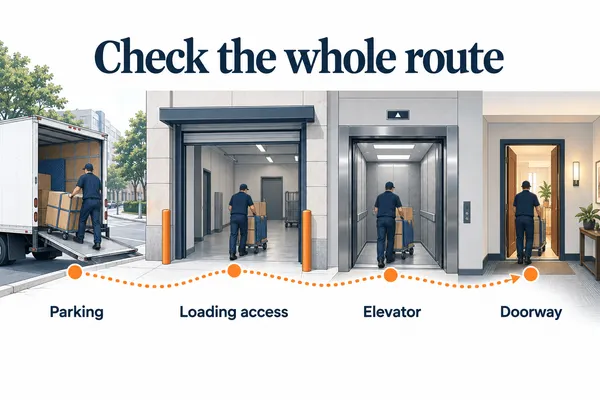
Confirm the reservation with the building contact and record the usable cab and door dimensions, load limit, permitted hours, protection requirements and route from truck to elevator to unit. Assign responsibility for the reservation and required building paperwork; give dispatch the confirmation and a contact for move day.
Ask whether elevator handling is included or separately priced, which tariff item and minimum apply, and how waiting time or a missed reservation would be handled. Separate a building’s reservation fee or refundable deposit from the mover’s service charge and identify who collects each. If the elevator is unavailable or an item will not fit, reassess the safe route and document the service and price implications before proceeding under the applicable change rules.
These are practical checks, not universal fees. For covered interstate moves, see 49 CFR 375.401(f) and tariff service-term requirements. Check the Tariff entry and Unexpected Moving Costs guide for calculations, required notices and delivery-payment distinctions. Record later changes through Change of Scope.
Sources & Evidence
Operating-practice note: Elevator access and any related charges vary by building, mover, tariff, and service model. TRE treats elevator use as an access condition that should be identified before move day when practical.
Read the Unexpected Moving Costs guide →
The Relocation Ecosystem provides educational information and does not provide legal advice.


Add your perspective
What does your experience add?
Which part of this guidance matches your experience—and which needs a different perspective?
Share one example, your role and any supporting evidence. Disagreement is welcome when it helps clarify the decision.