
Moving Estimates: What You Need to Understand Before You Sign
A practical guide to binding and non-binding moving estimates, scope, surveys, documents and the questions to ask before signing.

Published 4 Sep 2026 · Updated 9 Sep 2026. Sources, scope and corrections
Who this affects: Customer · Sales and estimating · Operations · RMC
Where this sits in the move: Survey → Estimate → Booking → Scope confirmation
A moving estimate is only as reliable as the move it describes.
Before signing an estimate, the most important question is not simply “What is the price?” It is whether the document accurately reflects the shipment, services, access conditions, timing, and assumptions behind that price.
Start With the Survey
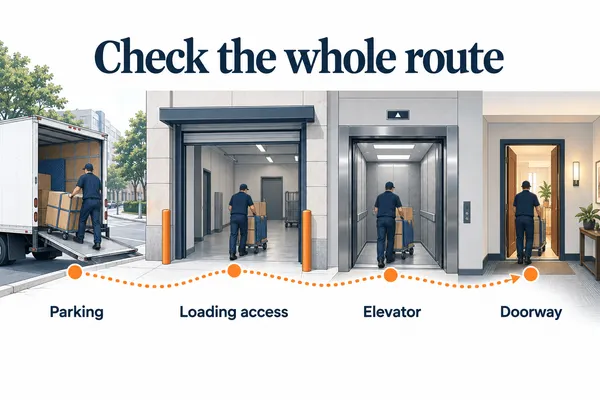
The survey is where the mover gathers the information used to price and plan the move. Missing rooms, storage areas, specialty items, packing needs, stairs, elevators, long carries, or other access conditions can cause the real move to differ from the priced move.
Confirm which dated survey and planning inventory the estimator used. The customer should confirm inclusions and exclusions; estimating and operations should share the same goods list, access details and unresolved assumptions.
Binding vs. Non-Binding
A binding estimate fixes the charge for the quantities and services included in the agreed scope, subject to lawful changes when the shipment or requested services change.
A non-binding estimate is a projection. For covered interstate moves, final charges follow the carrier’s applicable tariff and the shipment and services actually provided. Ask how the tariff calculates those charges; do not assume every estimate uses the same weight, volume or other pricing method.
What Can Change the Price?
A change of scope can occur when the actual shipment, access, services, timing, or responsibilities differ from what was originally surveyed and priced.
Common examples include added items, packing, storage, specialty handling, shuttle service, long carries, stairs, or destination conditions that were not included in the original assumptions.
Resolve Changes Before Loading
A changed scope does not automatically authorize a higher charge. Under 49 CFR 375.403 and 375.405, added goods or services identified before loading require the applicable estimate procedure. If the carrier proceeds, it may reaffirm the existing estimate or prepare a new estimate for the added scope, signed by the customer. A binding estimate may also be treated as non-binding by written agreement.
Ask which option is being used before loading begins, keep the prior and current records, and confirm that operations and the crew received the agreed scope. Services arising after the bill of lading is issued have separate notice, agreement and payment rules; the timing and who requested the service matter. See Change of Scope.
What about a not-to-exceed estimate?
A stated maximum and a fixed total are different commitments. Read Not to Exceed Estimate (NTE) for the Texas proposal distinction, lower-bill questions and written scope checks. Do not assume the label creates a separate universal federal estimate category.
Comparing pounds with cubic feet? Use the pricing-method comparison to separate the quantity from the estimate commitment.
For non-binding interstate estimates, the 110-percent rule concerns collection at delivery for the estimated services; it is not a cap on the final bill. Separately permitted charges for customer-requested additional services and tariff-defined impracticable operations may also be collectible at delivery. Ask for a written breakdown distinguishing the amount due to receive the shipment from any later bill.
Documents Should Tell the Same Story
The estimate should align with the Bill of Lading, inventory and actual services being performed. An Order for Service, where used, should match those records too. FMCSA removed the separate federal order-for-service requirement in 2022; state rules and provider processes may differ.
If one document describes a different move from another, ask for clarification before the shipment is loaded.
Use the Moving Documents guide to follow the full record from survey through claims, including the bill of lading’s advance timing and signing requirements.
Questions to Ask Before You Sign
- Is this estimate binding or non-binding?
- What inventory and services are included?
- What access conditions were assumed?
- What services could create additional charges?
- How will changes be documented?
- Which company will actually transport the shipment?
- What tariff or pricing rules apply to the move?
An estimate’s price commitment is different from its calculation method. Compare time, distance, weight and cubic-foot figures in our guide to how moving quotes are priced.
Check jurisdiction before comparing estimates
Confirm the complete shipment route and which rules apply. Estimate labels, change documentation and payment protections can differ by state. The local, intrastate and interstate guide separates jurisdiction from pricing; the state requirements pilot links to official guidance for six states.
Primary Sources
Explore more Moving & Relocation Help →
The Relocation Ecosystem provides educational information and does not provide legal advice. Requirements differ by move type and jurisdiction.


Add your perspective
What does your experience add?
Which part of this guidance matches your experience—and which needs a different perspective?
Share one example, your role and any supporting evidence. Disagreement is welcome when it helps clarify the decision.