
Local, Intrastate and Interstate Moving: What Changes and Why It Matters
Understand local, intrastate and interstate moving, verify the right mover, and compare pricing, documents and state-specific protections.

Published 4 Sep 2026 · Updated 4 Sep 2026. Sources, scope and corrections
Local describes a service area. Intrastate and interstate describe the shipment’s jurisdiction. Full service describes the tasks agreed with a provider. Establish all three before comparing moving quotes.
This guide covers U.S. household-goods moves. It helps customers, estimators, coordinators and crews identify the right questions from planning through delivery.
Start with the whole shipment
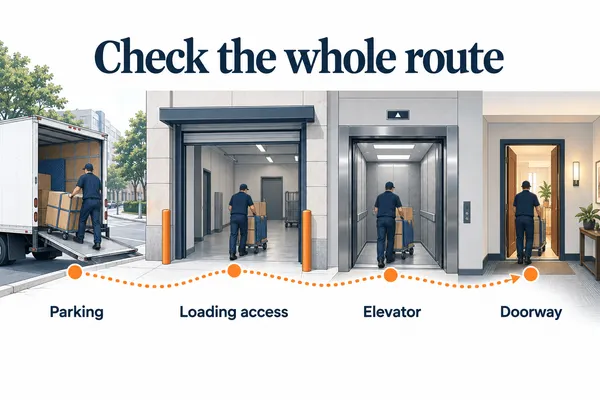
An interstate shipment can cross a state boundary, travel between two points in one state through another state, or include a local leg of a shipment originating elsewhere. The truck you see does not necessarily cross the boundary itself. Ask about the complete origin, destination and route, including storage and transfers. FMCSA explains the jurisdiction tests.
Hypothetical examples: A short trip across a state line is interstate. A long trip entirely within one state can be intrastate. Same-state pickup and delivery need further checking when the route leaves the state or the delivery finishes an earlier interstate shipment.
Six terms that answer different questions
- Local Move: a nearby service description; check the applicable state rules and provider’s definition.
- Intrastate Move: transportation within one state that is not part of an interstate shipment.
- Interstate Move: a jurisdiction category based on the shipment’s movement and circumstances.
- Long-distance move: a distance or marketing description. It does not establish jurisdiction or one nationwide mileage threshold.
- Labor-only moving service: agreed work such as packing, loading or unloading, with transportation arranged separately. Specify who supplies and drives the vehicle and who is responsible at each handoff. Its legal treatment depends on the actual service and state.
- Tariff: applicable rates, calculation rules and service terms. Ask which provisions support the quote.
California, for example, identifies packing/unpacking-only businesses as an exception to its household-mover licensing requirement only when they do not also act as a household mover. That is a California distinction, not a nationwide exemption for every labor-only provider. BHGS industry guidance.
Separate pricing from the promise
An hourly rate explains a calculation; it does not by itself state the maximum bill. Distance, weight, volume and fixed totals can have different roles. Ask what is measured, how changes are documented and what the written estimate promises. Read the Moving Estimates guide and compare the same inventory, packing and access conditions.
Do not transplant one state’s mileage cutoff or estimate terminology into another. Texas’s consumer guidance describes binding and not-to-exceed proposals. North Carolina publishes its own hourly and weight/distance framework. TxDMV · NCUC Moving 101.
What “regulated” actually needs to explain
TRE compares requirements by dimension: authority to operate; rates and tariffs; estimates and contracts; business insurance; liability for belongings; claims and complaints; and service exceptions. Labels such as regulated, deregulated and semi-deregulated are too broad to answer these questions alone. Use “deregulated” only with the relevant legal history and current rules.
For example, Arizona’s Attorney General describes no mover-specific registration or professional licensing requirement, while Arizona statutes still address misleading charges, contracts and unlawful withholding of belongings. Absence of one licensing requirement does not mean absence of legal obligations. Arizona AG guidance · A.R.S. §44-1613.
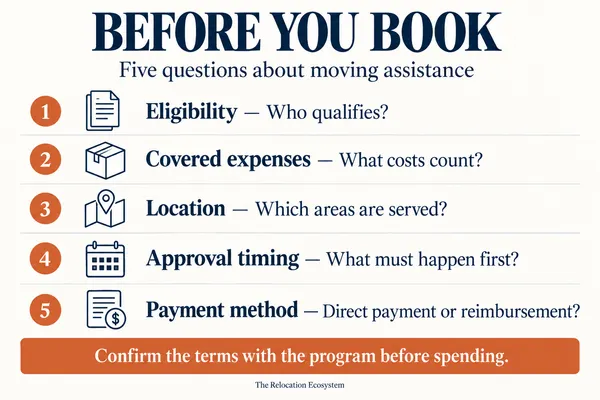
Before you book: a practical checklist
- Record the full route and any storage or transfer arrangements. Resolve uncertain jurisdiction with the mover and appropriate agency.
- Identify the carrier’s legal name and any broker. For interstate service, check the FMCSA mover database; for intrastate service, use the relevant state’s authority lookup.
- Request the written price calculation, estimate commitment, included tasks, exclusions and change process.
- Compare the moving documents with your inventory. Keep copies before work begins.
- Separate the company’s insurance from your selected protection for belongings. Confirm any storage transition in writing.
- Confirm who receives questions, claims and delivery instructions. Keep a dated record of changes.
If something goes wrong
Preserve photographs, signed documents, receipts and written messages. Follow the applicable claim process promptly; deadlines and remedies vary. A regulator complaint and a claim for compensation serve different purposes. FMCSA uses complaints to inform enforcement decisions; filing one does not itself settle your damage claim. FMCSA complaint guidance.
For intrastate questions, start with the state agency’s consumer guidance and complaint route. If goods are being withheld, seek the appropriate state enforcement help. Do not assume every state has the same release or payment rule.
Keep the handoff clear
Customer → estimator: complete shipment and access information. Estimator → coordinator: documented jurisdiction, price basis and agreed tasks. Coordinator → crew: current inventory, access, contacts and changes. Crew → delivery contact: condition records, documents and unresolved issues.
Continue with Full Service, access and additional services, storage and the moving checklist.
Source review: September 4, 2026. Educational guidance, not advice on an individual dispute. Source publication dates and legal effective dates differ; verify the rules and documents for your move. Hypothetical examples are illustrative. See Sources & Evidence.
Find requirements for your state
Use Moving Within Your State: Requirements, Rights and Mover Verification to check the six published pilot profiles: Arizona, California, Florida, North Carolina, Texas and Washington. Each profile links to official sources and identifies questions still requiring verification. Other states and D.C. remain pending.


Add your perspective
What does your experience add?
Which part of this guidance matches your experience—and which needs a different perspective?
Share one example, your role and any supporting evidence. Disagreement is welcome when it helps clarify the decision.