
The Anatomy of a Move: What Happens, Who Is Responsible, and What Comes Next
Follow a household from the decision to move through delivery and settling in. Clarify who owns each step, what must travel between teams, and when to check for moving assistance.

Published 25 Sep 2026 · Updated 25 Sep 2026. Sources, scope and corrections
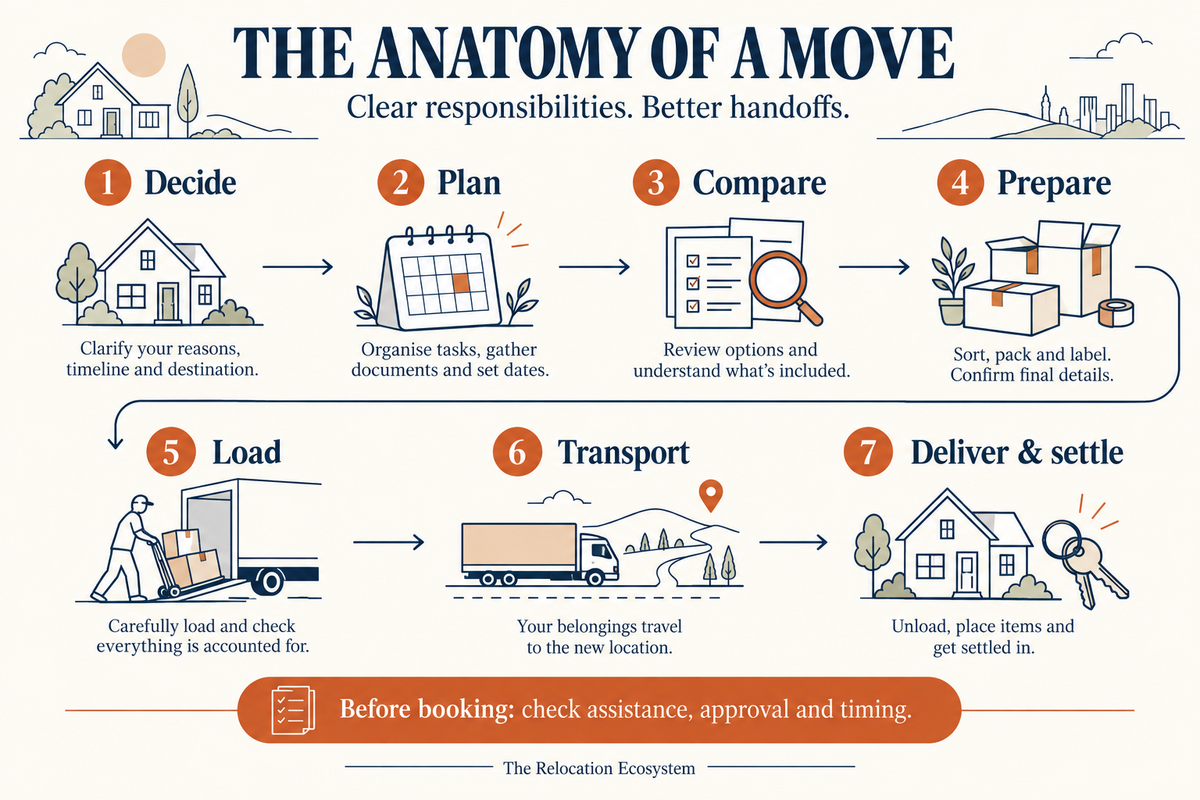
A move is a chain of decisions and handoffs. Knowing what happens at each stage helps a household protect its time, belongings, budget and sense of control.
Consider an illustrative household moving from a rented home to a new city. One adult has a new job, a child is finishing school, and an older parent wants familiar routines during the change. This is a planning example, not a reported customer case. Several organizations will be involved, but the household remains the source of important choices: what moves, what matters most, who may decide, and what “done” means.
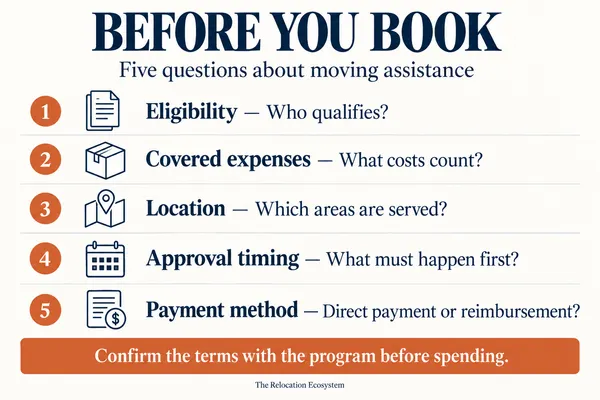
Before booking services or spending money, ask: Can someone help pay for my move? An employer, government or community program may have rules about eligibility, approval, provider choice, covered costs and timing. Get the decision and terms in writing before relying on assistance or committing funds.
1. Decide what the move needs to accomplish
Human concern: Household members may disagree about what to keep, when to travel, or how much change feels manageable.
Responsibility: The household names priorities and constraints. A trusted coordinator can gather input, but should not quietly decide for everyone. A funding program may set separate requirements.
Ask: What must be ready on the first night? Which routines, people, pets or access needs require special planning? Who can approve changes?
Common misunderstanding: The largest task is not automatically the most important. A familiar chair, school record or accessible route may matter more than an extra service.
Useful tool: Make a one-page move brief: destination, target dates, priorities, decision-maker, access needs, contacts and unresolved questions. Keep private care and identity information in a separate secure record.
2. Plan dates, access and dependencies
Human concern: Leases, work, school, building access and family availability may follow different timelines.
Responsibility: The household confirms its housing arrangements. The employer, landlord, building manager, school, care provider or mover confirms the part within that party’s authority. One person records the latest confirmed plan.
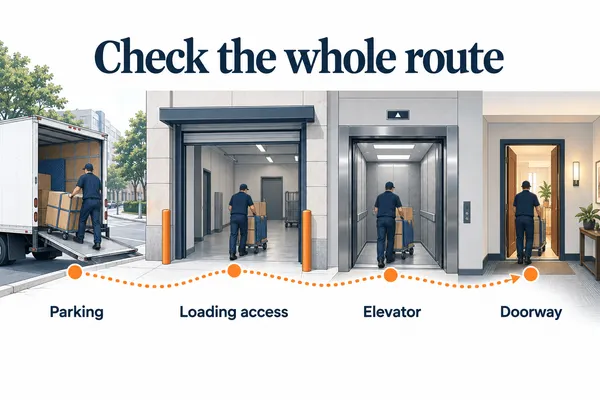
Ask: When can we enter the destination? What are the move-out and key-return requirements? Are parking, elevators, permits or appointment windows involved at either end?
Common misunderstanding: A reservation is not confirmed access. Different parties may use “move date” to mean different milestones.
Useful tool: Build a dated sequence with an owner and confirmation beside each dependency. Use the address-change checklist and Household Transition Tracker for services and records.
3. Compare services and written estimates
Human concern: The household needs a service level it can afford and manage, with a clear understanding of what remains its own work.
Responsibility: The household describes the shipment accurately. The provider explains scope, exclusions, assumptions and the change process. An employer or program confirms any required provider or estimate approval.
Ask: Who packs, loads, drives, unloads and assembles? Which services and materials are included? How are added items, waiting time or difficult access handled?
Common misunderstanding: A rental truck, container, loading crew and full-service mover do not include the same tasks or protection.
Useful tool: Compare the same inventory, dates, access and services using the mover comparison worksheet. For U.S. interstate household-goods moves, use FMCSA’s Protect Your Move resources to research the company and understand mover-versus-broker responsibilities.
4. Prepare, sort and pack
Human concern: Sorting brings memories, disagreements and fatigue. People need time to decide while retaining access to everyday essentials.
Responsibility: Authorized household members decide what is moving. Whoever packs confirms exclusions and special handling. Check provider rules for items they will not accept.
Ask: What travels with us? What stays accessible until departure? Who handles valuables, private documents and specialty preparation?
Common misunderstanding: A packed box is not necessarily a documented box. A room label does not replace an inventory or agreed handling instructions.
Useful tool: Prepare a room-by-room list and a first-days kit with chargers, basic clothing, toiletries, work or school essentials and comforting belongings. Confirm appliance preparation with the manufacturer or a qualified service provider.
5. Load and record the handoff
Human concern: Departure day can move faster than the household can track.
Responsibility: The authorized contact reviews the inventory and condition record. The crew follows the agreed work order and raises changes through the agreed approval process. A household contact stays reachable.
Ask: What goes on the truck, what stays, and who has the inventory copy? What happens if an item differs from the list or cannot pass through the access route?
Common misunderstanding: A signature has the meaning stated in that document. Read it, ask questions and retain a copy.
Useful tool: Keep a handoff record with the date, people involved, shipment reference, exceptions, appropriate photos and next contact. Use the Dictionary to clarify unfamiliar document terms.
6. Transport and track changes
Human concern: People may travel separately from their possessions and feel uncertain about arrival.
Responsibility: The carrier communicates under its agreement. The household keeps contact details current and manages travel unless another arrangement is confirmed in writing.
Ask: Who provides updates? What is the delivery range? Who may receive the shipment? What happens if destination access changes?
Common misunderstanding: A projected delivery window is not necessarily a firm appointment.
Useful tool: Keep the order, inventory, protection selections, receipts and contact log together. Share changes promptly and save written replies.
7. Receive, inspect and settle in
Human concern: Tired people still need time to notice missing items, damage, access barriers and immediate household needs.
Responsibility: The receiving contact checks the shipment and follows the applicable written exception or claims process. The household separately restores routines and closes out address, school, work and service changes.
Ask: What arrived? What remains? Which exceptions are recorded? Who still needs an update? What would make tonight feel settled?
Common misunderstanding: Delivery does not finish every obligation. A delivery note may not replace a formal claim; check the required process and deadlines.
Useful tool: Document visible concerns, retain copies, and assign each unresolved task an owner and follow-up date. Revisit the Household Transition Tracker during the first week.
Make the handoffs visible
Every stage should have a named owner, a practical question, a written record and a next contact. This extends TRE’s Customer Experience Is Built in the Handoffs discussion into a household planning sequence. For an older adult’s move, use the senior move-planning guide to protect choice, dignity and familiar routines.
Start with the household’s priorities, confirm each party’s authority, and revisit the plan when facts change. The goal is a sequence people can understand, question and adjust.
This article offers a general planning framework. Responsibilities depend on the actual service agreement, move type and jurisdiction. Verify specific requirements with the responsible provider or agency.


Add your perspective
What does your experience add?
Which part of this guidance matches your experience—and which needs a different perspective?
Share one example, your role and any supporting evidence. Disagreement is welcome when it helps clarify the decision.