
Senior Move Planning: How to Protect Choice, Routine and Dignity
A person-first senior move begins with the older adult’s priorities. Coordinate decisions, belongings, care, access and the first days after arrival.

Published 16 Sep 2026 · Updated 30 Sep 2026. Sources, scope and corrections

A senior move works best when the older adult remains involved in decisions, the plan protects familiar routines and essential possessions, responsibilities are explicit, and the pace allows time for questions and adjustment.
Moving later in life is rarely just a change of address. It can involve healthcare, mobility, finances, family roles, treasured possessions, community ties and a home that may hold decades of memory. The first question should not be “How quickly can we pack?” It should be: What does the person moving want life to look like after the move?
The Administration for Community Living describes person-centered planning as a process directed by the person receiving support. It begins with that person’s strengths, goals, needs, preferences and desired outcomes—not with a provider’s checklist or a family member’s preferred solution.
This guide is for older adults planning their own move and for relatives, friends or professionals helping them. It provides general educational information, not medical, legal or financial advice.
Begin with the life the move is supposed to support
Before touring communities, calling movers or sorting closets, write down the reason for considering a move.
Possible goals might include:
- living closer to family or friends;
- reducing home maintenance;
- improving accessibility or fall safety;
- gaining reliable transportation, meals or social opportunities;
- being closer to medical care;
- moving to a more manageable cost structure; or
- receiving more daily support.
Then ask what the older adult wants to preserve. Privacy? A pet? A garden? A familiar neighborhood? Space for visitors? A religious or cultural community? The ability to cook? These are not minor preferences. They are part of whether the next home will actually work.
Aging in place may remain possible when the home and available services can be adapted. A move should be compared with realistic alternatives—not treated as inevitable because someone has reached a certain age.
A useful decision statement:
We are considering this move because ________. The new setting must allow ________. We do not want to lose ________.
If family members disagree, return to that statement. Separate the older adult’s priorities from everyone else’s concerns and identify which concerns are supported by evidence: a recent fall, missed medications, isolation, unaffordable repairs, caregiver strain or another specific condition.
Compare destinations by daily life, not labels
“Independent living,” “assisted living,” “memory care” and “nursing home” are not interchangeable terms. Services, staffing, contracts, licensing and costs can vary by state and community.
Compare each option against the same questions:
- What can the person do independently today?
- Where is help needed with bathing, dressing, meals, medication, mobility, housekeeping, transportation or finances?
- What needs may reasonably change during the next few years?
- Is the home physically accessible now—not merely adaptable later?
- Which services are included, optional or unavailable?
- What happens if care needs increase?
- What are the full recurring charges and likely add-on costs?
- How easy will it be to maintain family, friendship, medical, faith and community connections?
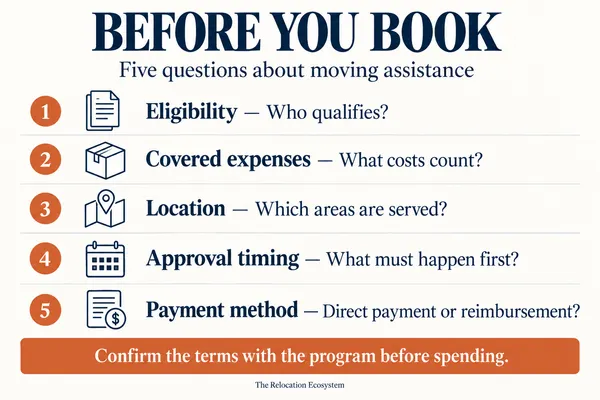
Do not assume Medicare will pay for long-term residential care. Medicare generally does not cover custodial care when that is the only care needed, although it may cover qualifying short-term skilled care and certain medical services. Confirm coverage directly with Medicare, Medicaid, long-term-care insurance, the relevant plan and the community before signing.
Define who may decide, help and receive information
Being willing to help does not automatically give someone authority to sign, spend, disclose private information or override a decision. Confirm who may sign moving or housing documents, authorize added expenses, speak with providers, receive private information and make an urgent decision.
Create a simple responsibility list:
| Area | Lead | Decision-maker | Backup |
|---|---|---|---|
| Housing and contract | |||
| Medical and prescriptions | |||
| Sorting and family distribution | |||
| Moving company | |||
| Financial and legal documents | |||
| Utilities and address changes | |||
| Move-day support | |||
| New-home setup |
The older adult remains the decision-maker unless valid legal authority says otherwise. Legal authority, healthcare authorization and financial authority are different issues. Use qualified guidance when documents or decision-making authority are unclear.
Build a timeline that allows rest and reconsideration
Work backward from access, pickup, travel and delivery dates. Build in time for visiting the new home, measuring rooms, making choices in manageable sessions, reviewing moving documents, coordinating care, saying goodbye and resting before and after travel.
Avoid using fatigue as a reason to take over. Pause, reduce the number of choices or return to the decision later when possible. Use I’m Moving: A Six-Stage Moving Checklist for the overall sequence, but adjust its pace to the person.
Protect health and care continuity
Prepare a portable health file containing:
- current clinicians, pharmacy, insurance and emergency contacts;
- an up-to-date medication list, including nonprescription medicines and supplements;
- allergies, diagnoses, mobility needs and essential equipment;
- copies or locations of advance directives and other authorized health documents;
- upcoming appointments and refill dates; and
- the plan for transferring records and establishing new providers.
Do not pack medications, hearing aids, glasses, mobility devices, chargers or essential medical supplies on the moving truck. Keep them with the person in a clearly labeled essentials bag.
Ask a clinician or pharmacist whether the move introduces specific risks. Some medicines can cause dizziness or sleepiness and increase fall risk. A current medication list also makes handoffs between pharmacies, clinicians, relatives and care communities safer.
A move may affect Medicare Advantage or prescription-drug plan options. Moving outside a plan’s service area—or moving within it when new plan options become available—can create a Special Enrollment Period. The timing depends on when the plan is notified, so contact the plan or 1-800-MEDICARE before the move.
If dementia is involved, seek individualized guidance from the care team. Familiar objects, a calm arrival, consistent routines, reduced noise and staff who know the person’s habits may ease the transition, but the plan should reflect the person’s condition and professional advice.
Design the new home before deciding what moves
Measure the new rooms, doors, hallways, elevators and storage. Draw a simple floor plan. Place the bed, favorite chair, dining surface, lighting, mobility equipment and clearest walking routes first. Only then decide which additional furniture fits.
Safety is not a cosmetic finishing step. Reduce trip hazards, improve lighting, install appropriate grab bars and make sure stairs and walking routes are easy to navigate. Consider an occupational therapist or another qualified accessibility professional when mobility, vision, cognition, transfers or past falls create concerns.
The goal is not to make the home look clinical. It is to support familiar routines with fewer hazards.
Sort possessions without turning memories into deadlines
Downsizing can feel like a series of losses if the process moves faster than the person can make decisions. Work in short sessions and begin with a low-emotion area.
Use destination categories rather than one vague “keep or get rid of” choice:
- move to the new home;
- give to a named person;
- sell or donate;
- digitize or photograph;
- store temporarily with a decision date; and
- discard or securely shred.
Set aside documents, jewelry, cash, medications, photographs, keys and irreplaceable items before helpers or vendors enter the home. Record gifts and sales. If the person’s capacity or ownership is disputed, do not distribute property until proper authority is established.
See Packing and Specialty Items and Moving Valuation and High-Value Items for related guidance.
Hire and coordinate services with verification built in
Decide whether the move needs a moving company alone or added support such as sorting, packing, estate-sale coordination, donation removal, cleaning, accessibility work or new-home setup. Ask every provider to describe exactly what it will do, what it will not do, who will perform the work, how changes are approved and how complaints or damage are handled.
For an interstate household-goods move, obtain written estimates from several movers, confirm the mover is authorized and insured, review complaint history and read Your Rights and Responsibilities When You Move. The estimate should be based on an actual or virtual inspection of the goods—not merely a verbal rate quote. State and local rules govern many intrastate moves.
Clarify in writing:
- mover versus broker status;
- packing and unpacking responsibility;
- inventory and high-value items;
- valuation or liability options;
- pickup and delivery windows;
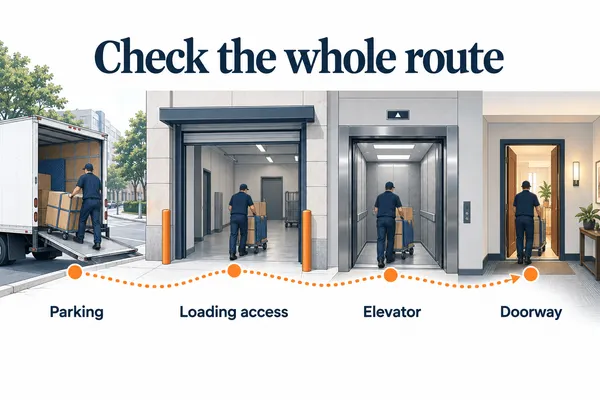
- stairs, elevators, long carries, parking and building restrictions;
- storage, shuttle and access charges;
- cancellation or date-change terms; and
- who can authorize additional services.
Never sign blank or materially incomplete paperwork. Keep copies of the estimate, order for service, inventory, bill of lading, payment record and photographs of important items.
Plan three days, not one moving day
The day before
- Confirm the arrival window, parking, elevators, access codes, keys and points of contact.
- Pack an essentials bag for several days, not several hours.
- Charge phones and medical devices.
- Confirm meals, transportation, pets and a quiet place away from the work.
- Photograph valuable items and the condition of both homes.
Moving day
- Assign one person to support the older adult and another to work with the moving crew.
- Keep medications, documents, valuables, mobility aids and the essentials bag out of the shipment.
- Use the inventory; do not rely on memory.
- Minimize last-minute decisions and competing instructions.
- Set up the bed, bathroom, lighting, phone, favorite chair and a clear walking route first.
The first days after
- Reestablish meals, sleep, medication, mobility and social routines.
- Confirm clinicians, pharmacy, transportation, mail, utilities and emergency contacts have the correct information.
- Watch for falls, missed medication, unusual confusion, sleep disruption, appetite changes or caregiver exhaustion, and contact an appropriate professional when concerns arise.
- Schedule a 48-hour check, a two-week check and a 30-day review of what is and is not working.
Senior Move Priorities and Responsibilities
| Priority or routine | Plan for the new home | Person responsible | Confirmed? |
|---|---|---|---|
| Daily routine | |||
| Essential belongings | |||
| Healthcare / medication | |||
| Mobility / accessibility | |||
| Social connection | |||
| Cultural / religious practice | |||
| Pet care | |||
| First-week follow-up |
Complete this with the older adult, not merely about them. Keep passwords, account numbers, medical details and identity information out of a shared worksheet.
A one-page readiness check
Before confirming the move date, can the team answer “yes” to these questions?
- The older adult’s goals and nonnegotiables are written down.
- The destination meets current needs and has been assessed for foreseeable changes.
- Costs, contract terms, services and coverage have been verified.
- Decision authority and team responsibilities are clear.
- Medical records, prescriptions, equipment and coverage transitions are planned.
- The new-home floor plan and safety setup are complete.
- Important possessions and documents are protected.
- The mover and other providers have been independently verified.
- Move-day transportation, meals, rest, pets and essentials are arranged.
- Someone owns the follow-up after the boxes are opened.
If several answers are “no,” that is not failure. It is useful information. A delayed move with a stronger plan may be safer and less costly than a rushed move built on assumptions.
The standard for a well-planned senior move
A successful senior move is not measured only by whether every box arrives. It is measured by whether the person arrives with dignity, essential routines intact, clear support and a home that works.
Plan around the person. Verify the handoffs. Make decisions visible. The move is not finished when the truck leaves—it is finished when daily life becomes workable again.
Where to get help
- The federal Eldercare Locator connects older adults and families with local services and Area Agencies on Aging. Call 1-800-677-1116.
- Medicare explains move-related Special Enrollment Periods. Call 1-800-MEDICARE.
- The FMCSA Protect Your Move program provides interstate-mover registration, complaint history, consumer rights and planning resources.
- The CDC’s STEADI resources include fall-risk and home-safety tools.
Sources and evidence notes
- Administration for Community Living. Person-Centered Planning.
- National Institute on Aging. Aging in Place: Growing Older at Home.
- Centers for Disease Control and Prevention. Preventing Falls and Hip Fractures.
- Medicare. Special Enrollment Periods.
- Medicare. Nursing Home Care.
- Consumer Financial Protection Bureau. Managing Someone Else’s Money.
- Federal Motor Carrier Safety Administration. Steps to Select a Mover and Consumer Rights and Responsibilities.
Last reviewed: September 28, 2026.


Add your perspective
What does your experience add?
Which part of this guidance matches your experience—and which needs a different perspective?
Share one example, your role and any supporting evidence. Disagreement is welcome when it helps clarify the decision.