
Access
What access means in moving and how parking, stairs, elevators, distance and building conditions affect execution.

Published 4 Sep 2026 · Updated 5 Sep 2026. Sources, scope and corrections
TRE Dictionary
Access
Access describes the physical conditions that affect how a crew, truck, and equipment can reach the goods at origin or destination.
In plain English
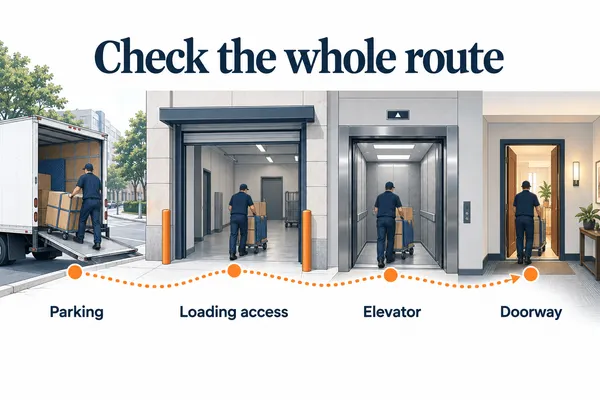
Access includes parking distance, stairs, elevators, loading docks, narrow streets, building rules, gates, height limits, long carries, and other conditions between the truck and the shipment.
Why it matters
Access directly affects labor, time, equipment, safety, shuttle needs, and sometimes price.
Who this affects
Customer · Surveyor · Dispatch · Driver · Crew
Where this sits in the move
Survey → Planning → Pickup and delivery
Stakeholder perspectives
The customer may describe the front door; operations needs the entire route between the vehicle and the goods.
Responsibility and handoff
Record parking, vehicle limits, stairs, elevators, carrying distance, permissions, and time restrictions at both ends.
Common misunderstanding
Street access does not guarantee truck access. A missed restriction can change equipment, labor, and timing.
TRE common-language definition
Access: The physical and property conditions that determine how people, vehicles, and equipment can reach and service a shipment.
Related terms
Long Carry · Stairs · Elevator · Shuttle · Accessorial Service
From access notes to an agreed service
At the survey, describe both addresses and the complete route from a legal truck position to the goods. Record measurements, photos where useful, restrictions and who confirmed building arrangements. The estimator should identify which conditions are included and which require a priced service; dispatch and the crew need the same version.
A difficult route alone does not establish a separate charge. Match the proposed service to the tariff item, allowance, charging unit and minimum. If conditions change, follow the Change of Scope process. The Unexpected Moving Costs guide explains notice, documentation and the distinction between final charges and delivery payment.
Sources & Evidence
TRE operating practice describes the access checklist. For covered interstate moves, see 49 CFR 375.401(f) on determining accessorial charges and 49 CFR 1310.3 on tariff service descriptions and rates.
Explore the full Relocation Dictionary →
September 4, 2026: Added practical stakeholder, move-stage, and handoff context to the existing definition.


Add your perspective
What does your experience add?
Which part of this guidance matches your experience—and which needs a different perspective?
Share one example, your role and any supporting evidence. Disagreement is welcome when it helps clarify the decision.