
Stairs
How stairs are treated as an access condition in moving and why flights and stair configuration affect labor and handling.

Published 4 Sep 2026 · Updated 5 Sep 2026. Sources, scope and corrections
TRE Dictionary
Stairs
Stairs are an access condition requiring goods to be carried up or down one or more flights during pickup or delivery.
In plain English
Stairs make handling more physically demanding and can slow production compared with level access.
Why it matters
The number of flights, turns, width, landing size, item dimensions, and distance from the truck can affect crew size, equipment, safety, time, and in some pricing systems additional charges.
TRE common-language definition
Stairs: Vertical access requiring goods to be manually moved between levels as part of the move path.
Related terms
Access · Elevator · Long Carry · Accessorial Service
Record the route before pricing the work
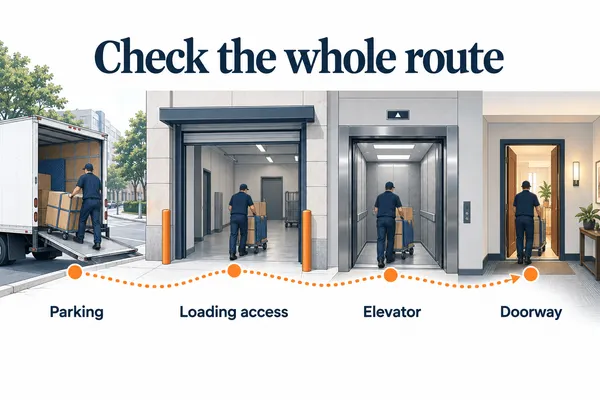
Count interior and exterior steps, flights and landings at both ends. Describe turns, narrow sections and bulky items that may not fit; send the same details to the estimator and crew. A building’s floor number alone may not describe the actual stair route.
Ask how the applicable tariff defines a flight, what allowance is included, which items or shipment quantity the charge uses, and whether a minimum applies. Clarify whether stair handling is included in the agreed price or labor time, or separately charged. If a planned elevator becomes unavailable, document the changed route and follow the applicable notice and agreement procedure.
These are practical checks, not universal fees. For covered interstate moves, see 49 CFR 375.401(f) and tariff service-term requirements. Check the Tariff entry and Unexpected Moving Costs guide for calculations, required notices and delivery-payment distinctions. Record later changes through Change of Scope.
Sources & Evidence
Operating-practice note: Stair definitions and charging methods vary by mover and tariff. TRE uses the term as a physical access condition affecting handling effort, time, and planning.
Read the Unexpected Moving Costs guide →
The Relocation Ecosystem provides educational information and does not provide legal advice.


Add your perspective
What does your experience add?
Which part of this guidance matches your experience—and which needs a different perspective?
Share one example, your role and any supporting evidence. Disagreement is welcome when it helps clarify the decision.