
Move Ready
A practical definition of move readiness: confirmed scope, prepared goods, access, documents, contacts and an executable plan.

Published 4 Sep 2026 · Updated 4 Sep 2026. Sources, scope and corrections
TRE Dictionary
Move Ready
Move ready means the people, goods, locations, information, and agreed services are prepared for the next stage of a move. It is a readiness condition to verify, not a guarantee that nothing will change.
In plain English
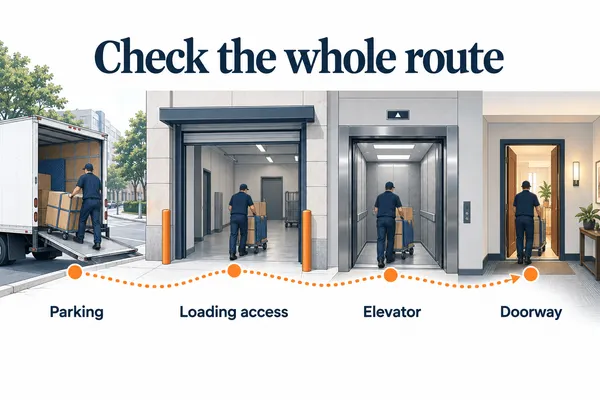
Being packed is only one part of being ready. The crew also needs an accurate scope, usable access, required building arrangements, the right equipment, documents, and a reachable decision-maker.
Who this affects
Customer · Coordinator · Sales · Dispatch · Crew · Building management
Where this sits in the move
Booking → Preparation → Pre-move confirmation → Pickup → Delivery readiness
Stakeholder perspectives
The customer may mean boxes are packed. Dispatch may mean labor and equipment are assigned. The crew needs those conditions to match the actual site and shipment.
Responsibility and handoff
Confirm the inventory, packing responsibilities, access, dates, permissions, specialty tasks, documents, contacts, and unresolved decisions. Assign an owner and deadline to any open item. Repeat the check for destination readiness.
Common misunderstanding
A booking confirmation is not proof of operational readiness. Unfinished packing, an unavailable elevator, or unreported goods can delay the move even when a truck has been assigned.
TRE common-language definition
Move ready: A verified state in which the agreed scope, preparation, access, resources, information, and decisions support the next planned stage of relocation.
Related terms
Survey · Packing · Change of Scope · Pickup Window
Sources & Evidence
Move ready is a proposed TRE practical standard, not a certification or regulatory status. FMCSA’s Moving Checklist provides related interstate preparation guidance. The readiness definition above is TRE’s synthesis.


Add your perspective
What does your experience add?
Which part of this guidance matches your experience—and which needs a different perspective?
Share one example, your role and any supporting evidence. Disagreement is welcome when it helps clarify the decision.