
Delivery Spread
What a delivery spread is and why it is different from a single guaranteed delivery date.

Published 4 Sep 2026 · Updated 4 Sep 2026. Sources, scope and corrections
TRE Dictionary
Delivery Spread
A delivery spread is a range of dates during which a shipment is expected or contractually permitted to be delivered.
In plain English
Instead of one exact date, the mover provides a delivery range covering multiple days.
Why it matters
Customers may hear an early date and treat it as a promise. Clear communication about the full spread is essential for housing, work, travel, temporary living, building access, and storage decisions. For interstate moves, pickup and delivery dates or periods should be reflected consistently in the move documents.
Who this affects
Customer · Coordinator · Dispatch · Driver · RMC
Where this sits in the move
Booking → Transit → Delivery planning
Stakeholder perspectives
The customer must arrange housing and availability; dispatch works within the actual service commitment.
Responsibility and handoff
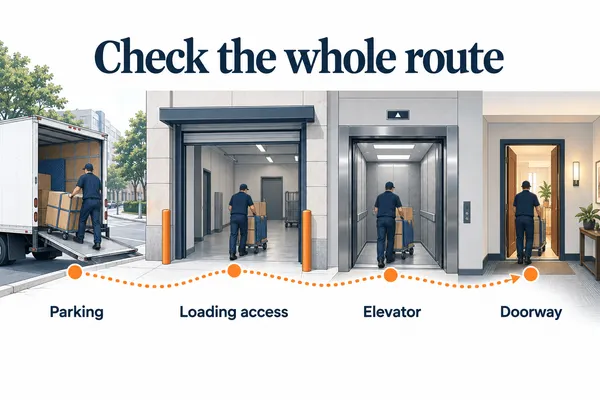
Record the agreed date range, notification process, contact owner, and building-access requirements.
Common misunderstanding
The first date in a spread is not necessarily a guaranteed delivery day. A date range differs from a time-of-day appointment.
TRE common-language definition
Delivery Spread: The stated range of dates within which delivery may occur under the move plan or contract.
Related terms
Delivery Window · Transit Time · Pickup Window · Storage-in-Transit
Sources & Evidence
Operating-practice note: “Delivery spread” is widely used in long-distance moving to describe a multi-day delivery range. The precise contractual language and calculation can vary by carrier, tariff, service model, and shipment.
Read the Pickup & Delivery Timing guide →
The Relocation Ecosystem provides educational information and does not provide legal advice.
Explore the full Relocation Dictionary →
September 4, 2026: Added practical stakeholder, move-stage, and handoff context to the existing definition.


Add your perspective
What does your experience add?
Which part of this guidance matches your experience—and which needs a different perspective?
Share one example, your role and any supporting evidence. Disagreement is welcome when it helps clarify the decision.