
Estimate
What a moving estimate is, what it should be based on, and why scope accuracy matters.

Published 4 Sep 2026 · Updated 4 Sep 2026. Sources, scope and corrections
TRE Dictionary
Estimate
An estimate is a written pricing document describing expected moving charges based on the shipment, services, and conditions known when it is prepared.
In plain English
It translates the survey and requested services into a price framework. For interstate household-goods moves, the estimate may be binding or non-binding and is subject to specific federal requirements.
Why it matters
An estimate is only as reliable as the scope behind it. Missing inventory, access, packing, storage, or specialty handling can cause the actual move to differ from what was priced. FMCSA's Part 375 consumer-protection rules address how covered interstate estimates must be prepared and handled.
Check the scope behind the price
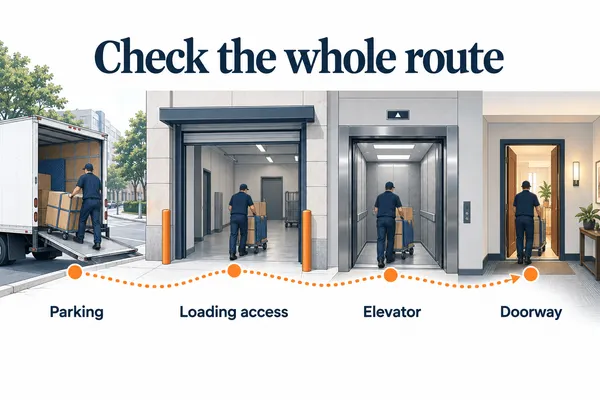
Before booking, compare the estimate with the survey and planning inventory. Confirm the locations, goods, packing, access conditions, dates and exclusions. Ask which assumptions could change the price or operating plan.
The customer needs the applicable written pricing agreement; operations and the crew need the scope that supports it. If an item or service changes, use the Change of Scope process and retain the prior and current versions. A verbal approval or an updated item list alone does not replace the documentation required by the applicable rules and contract.
Read FMCSA’s Tips for a Successful Move for interstate consumer guidance, then follow the records through Condition Report and Claim.
Use the Moving Documents guide to compare the estimate with the rest of the shipment record.
Who this affects
Customer · Sales · Operations · RMC
Where this sits in the move
Survey → Pricing → Booking
Stakeholder perspectives
Customers need a clear price basis; operations needs the actual labor, equipment, access, and services behind it.
Responsibility and handoff
Transfer the written scope, estimate type, exclusions, assumptions, and approved changes with the move.
Common misunderstanding
A price alone does not tell you whether it is binding, non-binding, hourly, or governed by another framework.
Jurisdiction matters
For U.S. interstate household-goods moves, see FMCSA estimating guidance. Texas intrastate moves use a binding or not-to-exceed proposal framework. Identify the move type before applying either set of terms.
TRE common-language definition
Estimate: A written pricing document based on the defined scope of a move, including the shipment, services, and known operating conditions.
Related terms
Binding Estimate · Non-Binding Estimate · Survey · Change of Scope · Tariff
Sources & Evidence
- FMCSA — Estimating Charges (Subpart D)
- FMCSA — Protect Your Move Glossary
- FMCSA — Tips for a Successful Move
Read the Moving Estimates guide →
The Relocation Ecosystem provides educational information and does not provide legal advice.
Explore the full Relocation Dictionary →
September 4, 2026: Added practical stakeholder, move-stage, and handoff context to the existing definition.


Add your perspective
What does your experience add?
Which part of this guidance matches your experience—and which needs a different perspective?
Share one example, your role and any supporting evidence. Disagreement is welcome when it helps clarify the decision.