
Load Planning
Load planning connects the goods list with equipment, protection, handling and delivery order. Learn which details must reach the crew and driver.

Published 5 Sep 2026 · Updated 5 Sep 2026. Sources, scope and corrections
Load planning is the process of matching a shipment’s goods, equipment and handling requirements to a workable loading and delivery arrangement. It turns survey and inventory information into a plan the crew, driver and dispatch can use.
What the plan needs to account for
- The goods included, their dimensions, weight and packing needs.
- The actual vehicle or container, usable space and applicable loading limits.
- Protection, compatibility and the securement method appropriate to the cargo.
- Shipment identification and separation where equipment carries more than one shipment.
- The delivery sequence, access restrictions and any planned transfers or storage.
Space is only one constraint
A shipment may fit by estimated cubic volume yet still need a different arrangement because of item shape, weight, protection or unloading order. The driver and loading team must check the real equipment and load, not rely only on an estimated cube or a room count.
For commercial motor vehicles covered by U.S. federal cargo-securement rules, FMCSA explains that cargo must be secured against movement. This entry describes the planning handoff; it does not prescribe a securement configuration or replace the responsible operator’s equipment-specific checks.
Who owns the handoff?
The surveyor records the goods and access conditions. The estimator carries those assumptions into the agreed scope. Dispatch assigns equipment and timing. The crew and driver use the actual conditions to execute and, when needed, revise the plan. Any change affecting cost or service commitments must be communicated through the appropriate move documents.
What a customer can clarify
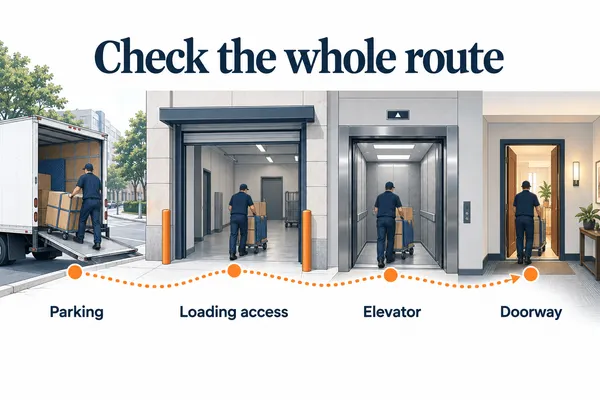
Identify items needed first at delivery, items traveling by another method, and anything added or removed after the survey. Confirm access restrictions at both ends. Ask how a change in the goods list will reach the people doing the loading.
Proposed TRE common-language definition
Load planning: the documented coordination of shipment characteristics, equipment, handling, protection and delivery sequence before and during loading.
Related terms
See Inventory, Capacity and Trailer Space, Shipment Density, Tier and Change of Scope.
Source and scope
FMCSA: cargo securement rules supports the federal securement context. TRE’s workflow and proposed definition are operating guidance; duties and requirements depend on the move and equipment. Source reviewed September 5, 2026.


Add your perspective
What does your experience add?
Which part of this guidance matches your experience—and which needs a different perspective?
Share one example, your role and any supporting evidence. Disagreement is welcome when it helps clarify the decision.