
Transferee
The employee being relocated, how their role differs from the employer and RMC, and why policy approval matters to service coordination.

Published 4 Sep 2026 · Updated 4 Sep 2026. Sources, scope and corrections
TRE Dictionary
Transferee
In employee relocation, a transferee is the employee moving to another work location in connection with an employer-supported transfer. Organizations may use related terms differently for new hires, assignments, and permanent transfers.
In plain English
The transferee is the person experiencing the relocation. The employer may authorize benefits and an RMC may coordinate them, while separate providers perform moving and other services.
Who this affects
Employee and household · Employer mobility team · RMC · Mover · Other service providers
Where this sits in the move
Transfer decision → Policy explanation → Authorization → Services → Arrival and completion
Stakeholder perspectives
The employee needs clear choices, deadlines, and support. The employer needs policy compliance and approvals. Providers need an authorized scope and a reliable contact.
Responsibility and handoff
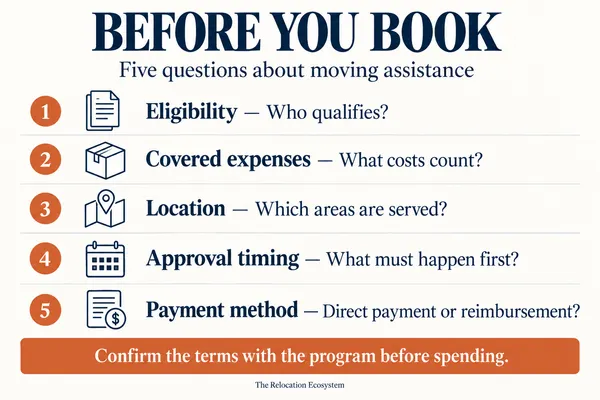
Clarify covered services, employee responsibilities, exception approvals, booking authority, contacts, and information-sharing arrangements. Explain which decisions the employee can make and which require employer approval.
Common misunderstanding
Being a transferee does not imply unlimited benefits or authority to approve every cost. An employee’s request and an employer’s authorization are different records.
TRE common-language definition
Transferee: The employee relocating in connection with a work-location transfer, whose relocation services and responsibilities are defined by the applicable program and agreements.
Related terms
RMC · Household Goods · Origin Service · Destination Service
Sources & Evidence
This is a TRE operating definition, not a determination of benefit eligibility. GSA’s relocation resource centers provide an example of employer-organized relocation support in the federal context; those program rules do not define every private employer’s benefits. Consult the specific employer policy.


Add your perspective
What does your experience add?
Which part of this guidance matches your experience—and which needs a different perspective?
Share one example, your role and any supporting evidence. Disagreement is welcome when it helps clarify the decision.