
How to Choose Your Moving Method: Movers, Rental Trucks, Containers or Loading Help
Compare movers, rental trucks, containers and loading help by responsibility, access, timing and total cost. Use a practical checklist before booking.

Published 25 Sep 2026 · Updated 25 Sep 2026. Sources, scope and corrections

Before comparing companies, decide which parts of the move you want someone else to handle. Packing, lifting, driving, storage and coordinating the handoffs are different jobs. A useful comparison starts with those responsibilities, your dates and the access available at both homes.
This guide helps households choose a service model. It is a planning framework, not a provider ranking or a promise that one method will cost less.
Start With the Constraints You Cannot Change
- People: Who can safely do the work, who wants help, and who will coordinate it?
- Dates: When must you leave, when can you enter the new home, and where will you stay if delivery happens later?
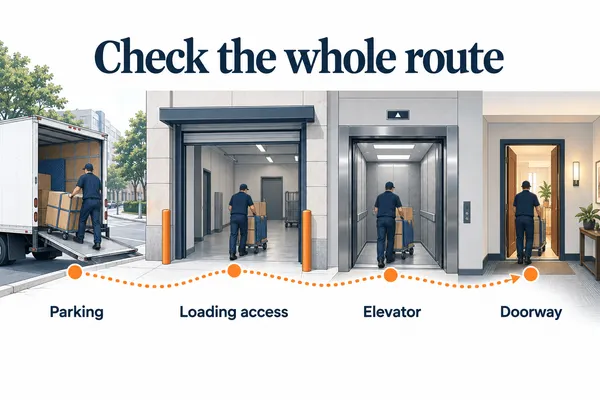
- Access: Can the proposed truck or container reach and use the loading space at both addresses?
- Belongings: What needs special preparation, equipment or a service the provider does not offer?
- Budget: What can you spend on the whole move, including the tasks you arrange separately?
Give every provider the same inventory, dates, access information and requested services. Otherwise, a lower quote may simply cover less work.
Compare Four Ways to Divide the Work
A mover supplies the crew and transportation
Confirm what the written scope includes: loading, transportation, unloading, packing, furniture preparation, storage and placement are separate questions. Do not assume the phrase “full service” includes everything you need. This model may suit a household that wants more of the physical work and shipment coordination handled by a provider.
You rent and drive the vehicle
You arrange the vehicle, driver, packing, loading and unloading unless you separately purchase help. Before choosing this model, check driver eligibility, vehicle dimensions, route restrictions, equipment instructions, collection and return arrangements, and the work required at each end. Being comfortable driving your own car does not establish that a particular rental vehicle fits your trip.
A provider transports a container or trailer you load
The provider handles transportation under its terms while you arrange packing and loading, either yourself or with separately hired help. Confirm equipment placement, loading time, pickup, transit, destination access, unloading and removal. U-Pack describes this division of work in its service explanation; individual providers and products differ.
You combine transportation with hired loading or unloading help
A hybrid move can divide the driving and physical work. U-Haul’s Moving Help marketplace, for example, lists independent labor providers. Treat each booking as a defined scope: who supplies equipment, who protects furniture, who secures the load, and who returns at the destination? A platform listing is not proof that every listed service is included.
Compare the Whole Cost, Not Just the First Quote
For each option, ask whether the following apply and record whether they are included, excluded or still unknown:
- Transportation or rental charges, allowed time and distance, fuel, tolls and return arrangements.
- Packing materials, protective equipment, loading and unloading labor.
- Delivery, collection, storage, additional handling and access-related work.
- Parking arrangements, building charges and equipment placement requirements.
- Protection choices, deductibles or exclusions, cancellation and date-change terms.
- Your travel, overnight accommodation, time away from work and backup arrangements.
Do not count an unknown as zero. Request a written explanation before comparing totals. The moving pricing guide explains why the calculation method and the price commitment are different questions.
Make Every Handoff Explicit
Use this short record for each stage: task; named person or company; agreed date or window; what completion means; evidence of completion; and contact if the plan changes.
For example, a loading crew finishing its work does not establish that a container has been collected. A transportation booking does not establish that unloading help is booked. Confirm both sides of every handoff before committing to a schedule.
Check Protection and Provider Roles Separately
Ask each provider what its terms cover while goods are being packed, loaded, transported, stored and unloaded. Identify gaps between separately purchased services and the process for reporting damage. Do not assume that one protection arrangement applies to every company or stage.
For an interstate household-goods mover or broker, use FMCSA’s explanation of mover and broker roles and the relevant registration checks. Do not automatically apply the same legal framework to rental equipment, labor-only services or every container arrangement. Check the specific service, route and applicable authority.
A Decision You Can Explain
Complete these sentences before booking:
- We chose this method because it fits our ______ constraints.
- We will handle ______ ourselves, and ______ will handle the rest.
- The unresolved cost or timing questions are ______.
- If access or dates change, ______ will coordinate the next step.
- We have written confirmation of ______ and still need ______.
If one option requires work, access or timing you cannot provide, resolve that gap before treating it as a viable choice.
Next steps: Use the Mover Comparison Worksheet, storage guide and six-stage moving checklist.
Source review: September 25, 2026. Provider pages illustrate their own service models and are not independent endorsements. The comparison questions and handoff record are TRE planning guidance. Specific obligations depend on the service, contract and jurisdiction.


Add your perspective
What does your experience add?
Which part of this guidance matches your experience—and which needs a different perspective?
Share one example, your role and any supporting evidence. Disagreement is welcome when it helps clarify the decision.